

Breaking Down The Production Part Approval Process, a Crucial Step in Quality Control
Aerospace programs are growing more complex and supply chains more global, causing manufacturers to increasingly rely on structured quality control frameworks to reduce risk and ensure consistency of parts and assemblies.
One way manufacturers are proving production quality is by using the Production Part Approval Process, or PPAP. PPAP documentation has historically been a cornerstone of automotive manufacturing, but is now gaining traction in aerospace projects as a way to help OEMs and suppliers validate production readiness.
The documentation proves part quality and helps build customer confidence ahead of manufacturing.

PPAP Documentation Explained
With roots in automotive manufacturing, PPAP documentation has become a standardized process to demonstrate that a supplier can produce parts that consistently meet all engineering, quality, and customer requirements.
Following PPAP gives manufacturers – and their customers – confidence that even the most complex parts can be produced repeatedly, at scale, and to exacting specifications – including those with tight tolerances.
Manufacturers following PPAP typically must submit PPAP documentation that delineates all production activities, including:
- Design records and engineering changes
- Process flows and control plans
- Failure Modes and Effects Analysis (FMEA)
- Measurement system analysis and dimensional results
- Material certifications and performance test results
- Initial production samples
PPAP documentation ultimately should provide a comprehensive picture of how a part is designed, manufactured, inspected, and controlled.

The Transition of PPAP to Aerospace Manufacturing
Aerospace quality control is reliant on industry standards like AS9100, First Article Inspection (FAI), and other rigorous quality management methods. While these steps are essential, PPAP is uniquely able to provide end-to-end production validation, demonstrating a whole-process quality approach.
For the same reasons the automotive industry has relied on PPAP documentation, the aerospace manufacturing industry is finding the same benefits.
Helping Control Increasing Program Complexity
Advanced materials, tighter tolerances, and highly-specialized machining processes add complexity to modern aerospace manufacturing programs. PPAP documentation helps streamline these programs by ensuring every step from raw material to final inspection is defined, controlled, and repeatable before production increases.
Bringing Greater Accountability to the Supply Chain
Supply chain uncertainty globally is causing OEMs to place higher expectations on suppliers for transparency, agility, and manufacturing maturity. PPAP documentation delivers on these expectations, providing capability early on in the program lifecycle and reducing concerns of late-stage delays or costly rework.
Reducing Risk in Production Transitions
OEMs want to know that adding a new supplier, introducing process changes, or moving from prototype to production isn’t going to create risks. PPAP documentation provides evidence that risks have been identified and resolved before parts enter service.

Aligning With Automotive and Defense Programs
For aerospace suppliers that also support automotive or defense customers, PPAP may already be a requirement. Suppliers can only benefit from applying the same disciplined approach to aerospace; it streamlines internal processes and simplifies quality management.

PPAP in Aerospace Manufacturing
Aerospace parts need to meet exacting specifications every time, and PPAP helps make it happen.
Process repeatability: PPAP documentation verifies that machining, inspection, and assembly processes are stable and controlled.
Traceability: PPAP documentation provides a clear record behind all audits, compliance, and production lifecycle.
Pre-Production Confidence: PPAP documentation demonstrates readiness before parts are delivered in volume or integrated into mission-critical systems.
Aerospace parts often have long service lives and strict regulatory oversight, and PPAP documentation provides meaningful validation and value.
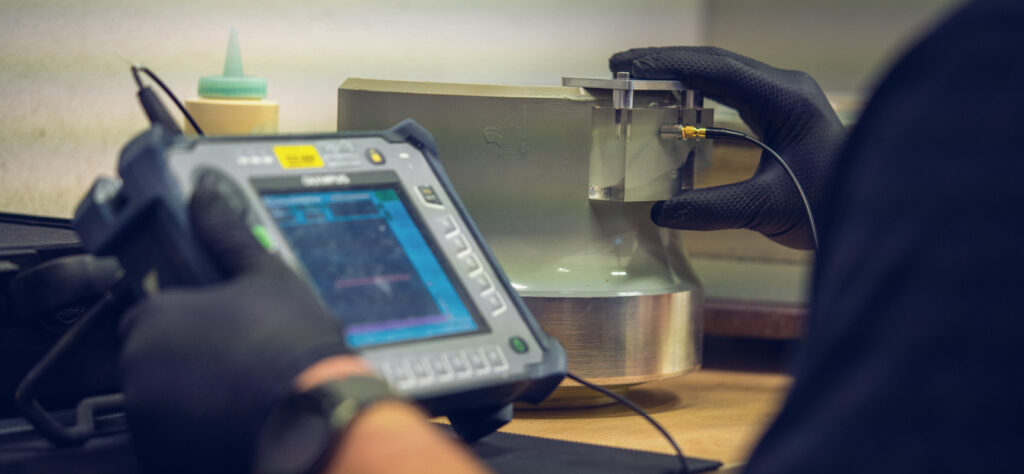
PPAP and Quality Control
It makes sense that validation should take place early in the manufacturing process. PPAP documentation ensures any issues will be uncovered before production, reducing the likelihood of faults appearing after delivery.
PPAP benefits include:
- Alignment between engineering intent and manufacturing execution
- Early detection of process gaps or capability limitations
- Stronger collaboration between OEMs and suppliers
- Reduced risk of nonconformance, delays, and cost overruns
Aerospace programs will only continue to evolve, with tight schedules and high stakes adding complexity to parts manufacturing programs. Integrating PPAP can make a measurable difference for aerospace projects, helping customers feel more confident and have greater transparency into manufacturing readiness, process controls, and documentation.
Of course, PPAP is not a replacement for established aerospace standards, but it does serve as a powerful complement, delivering greater assurance to OEMs before production begins.
