How They Affect Machinability and Design
In aerospace manufacturing, we need to push the boundaries of materials science to deliver the higher performance, lighter weights, and increased durability that evolving aircraft, spacecraft, and defense systems demand.
Five categories of emerging materials are creating new opportunities in aerospace:
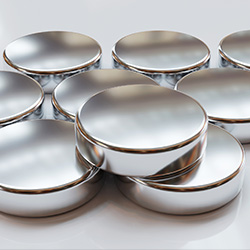
Superalloys:
High-performance nickel-chromium-based materials that deliver exceptional oxidation and corrosion resistance, even in the most extreme high-pressure or high-temperature environments.
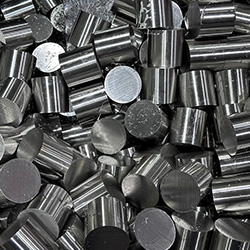
Alloys:
Heat-resistant and lightweight alloys made using titanium, nickel, or composite metals.
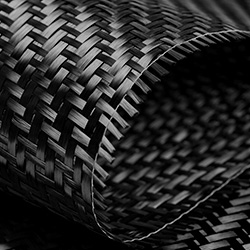
Composite Materials:
Engineered combinations of high-strength fibers with a binding resin that provides a superior, lightweight structure. The three main types of composites include carbon fiber (strength and stiffness), fiberglass (cost-effective strength), and kevlar-reinforced epoxy (impact resistance).
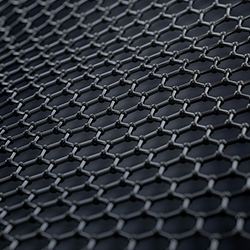
Graphene:
A lightweight, flexible, transparent sheet of carbon atoms that offers exceptional heat and electrical conductivity.
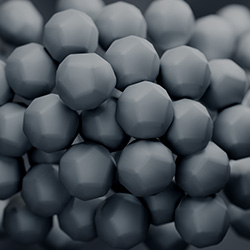
Polymer- and Ceramics-Based Nanoparticles:
Nanoparticles are highly strong and durable, and help shield against electromagnetic fields.
Now is certainly a burgeoning time for advancements in aerospace materials. According to Aerospace Materials Market research published by Markets and Markets, the compound annual growth rate (CAGR) of aerospace materials is expected to grow by 8.4% by 2030.
Each of these emerging materials offers attractive properties for aerospace applications; however, these same properties can present machinability challenges.
In this article, we’ll explain how aerospace parts manufacturers like Primus are selecting the best materials for both component designs and manufacturing processes, with consideration to the tooling strategies, production methods, and quality controls that turn emerging materials into high-performance parts and assemblies.
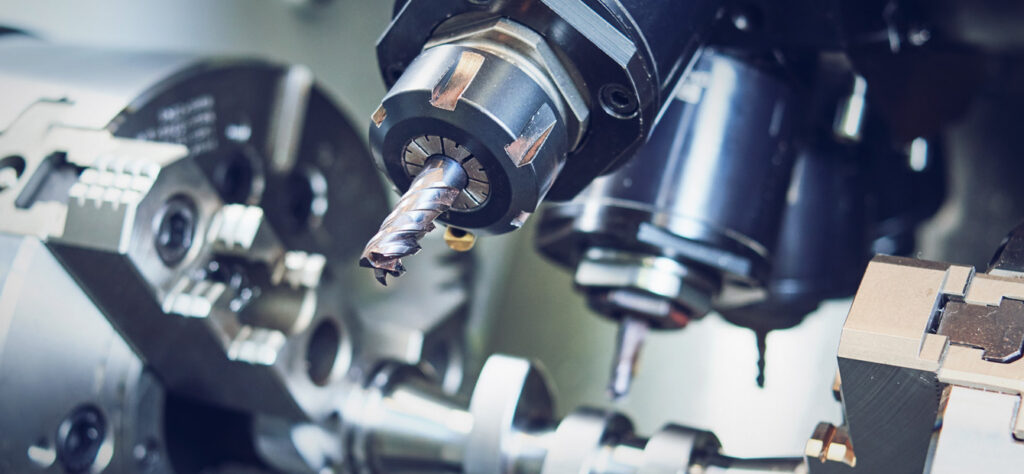
Machinability Considerations for Advanced Aerospace Materials
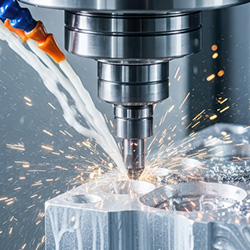
Heat-Resistance and Tool Wear
Because of the heat-resistant property of alloys, these materials retain heat during machining. Such extreme, repeated heat exposure can shorten the life of cutting tools. It can also impact surface finishes, which can have other implications for performance that manufacturers need to consider, such as premature wear, accelerated corrosion, or reduced stress tolerance.
How to Manage It:
- Maintain careful control of cutting speeds by leveraging high-quality tooling, advanced CAM software, and sensor monitoring of heat and tool wear.
- Implement tool cooling strategies such as liquid nitrogen, supercritical CO2, or minimum quantity lubrication.
- Use tools made with materials that provide high heat resistance during cutting and shaping, such as ceramic inserts like silicon nitride or alumina, cubic boron nitride, and other specialized carbide tools coated for high-temperature resistance.
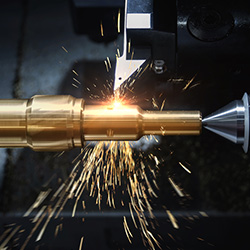
Material Strength and Work Hardening
Work hardening refers to increased difficulty in machining as materials become stronger during the machining process. Many of the tougher, heat-resistant advanced alloys, such as titanium and stainless steel, as well as the superalloy inconel, become stronger during machining, adding strain to cutting passes and increasing the risks of tool failure or part distortion.
How to Manage It:
- Use sharp, specialized cutting tools that can withstand material strengthening. Positive geometry inserts help reduce cutting forces, heat generation, and work hardening.
- Control feed rates to prevent tool dwell time. Lowering cutting speeds can also help with feed control.
- Apply high-pressure coolant to control heat generation during increased friction.
- Utilize down milling, in which the cutting tool rotates with the direction of the feed – starting at maximum chip thickness and reducing to zero – ultimately minimizing material surface stress, protecting surface finish.
Abrasion and Tool Wear and Tear
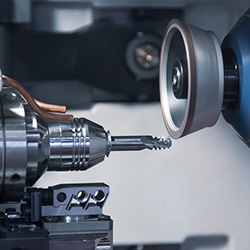
Composite materials – specifically carbon fiber – are composed of abrasive fibers that can cause rapid wear and tear of cutting tools if not properly managed during the machining process.
Carbon Fiber Reinforced Polymer is the most abrasive composite material used in aerospace manufacturing, with its fibers often compared to “thousands of tiny knives” and eliciting more of a grinding than cutting. Glass Fiber Reinforced Polymer and ceramic matrix composites are close seconds in abrasiveness, also requiring special treatment during cutting.
How to Manage It:
- Utilize diamond coated tools, which protect against abrasive fibers by increasing tool hardness.
- Optimize cutting parameters by reducing feed rates, using higher spindle speeds, and employing special geometries, which can reduce cutting forces and improve the removal of chips from the cutting zone.
- Implement air blasting or vacuum power to remove chips during dry machining, which ensures tool cooling to reduce thermal cracks while maintaining a clean composite.
- Keep tools maintained and routinely inspected to ensure they remain sharp, which helps manage heat generation and premature tool damage or failure.

Designing for Manufacturability Using Advanced Materials
The design process is paramount to the outcome of every manufactured part and assembly, and advanced material constraints must be considered early. Their potential to offer superior performance can be easily undercut by their potential to present costly or dangerous machining challenges.
Machining experts and manufacturing partners should collaborate during the design phase to ensure components are optimized for performance and manufacturability.
These collaborations should include:
- Consideration of thermal management and mechanical stress: Based on the aforementioned material properties, it’s no surprise that advanced materials respond differently to common tooling characteristics like thermal expansion, vibration, and mechanical loads. These factors need to be accounted for when specifying tolerances and structural features.
- Specifications for lightweight structures: One of the major reasons aerospace parts manufacturers favor advanced materials is their ability to deliver high-performance durability and strength in a lightweight package – a valuable combination for mission-critical applications.
That being said, even miniscule variations in design, from surface finish imperfections to dimensional inaccuracies, can threaten the material’s performance. Achieving a balance between lightweight design and strength requires precision machining to maintain tight tolerances and structural integrity.
Precision Machining is Advancing Aerospace Materials
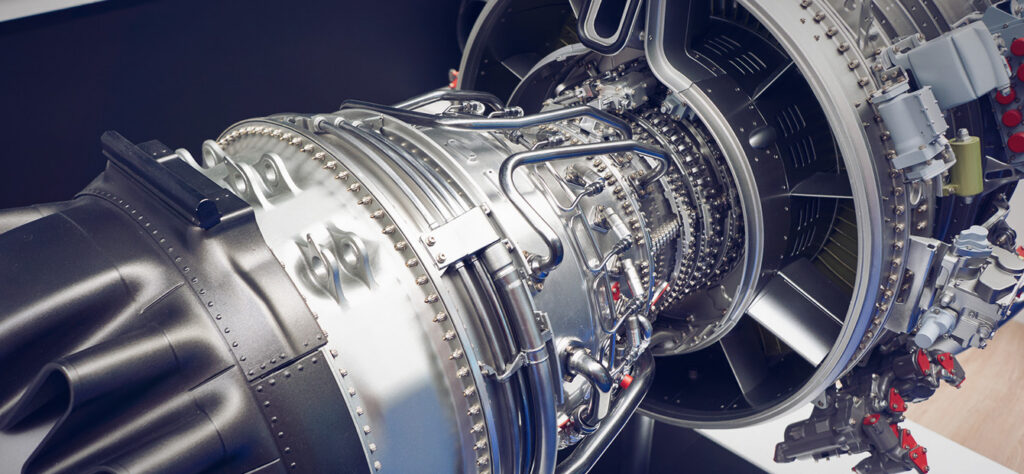
While advanced materials grow in use, advanced machining is taking center stage. The machinability of these specialized materials determines their success or failure, a fact that can’t be overstated.
Successfully producing high-performance parts and assemblies using advanced materials requires more than just standard machining processes.
Primus has been investing in precision machining technology for some time, as an early player in the manufacture of exotic and difficult materials.
Major machinability considerations for today’s aerospace manufacturers should include:
- Advanced tooling technology designed for hand-to-machine materials
- Optimized cutting strategies that reduce heat and minimize tool wear
- High-precision multi-axis machining systems capable of handling complex geometries
- Rigorous quality assurance processes that ensure compliance with all applicable standards
Advanced materials are helping aerospace OEMs combine innovative design and reliable production, and are just the beginning of an exciting advancement in what aerospace parts and assemblies can do for the end product.
Our precision machining expertise turns complex designs and advanced materials into mission-ready aerospace parts and assemblies, and our customers trust us to ensure reliability from concept through final production.