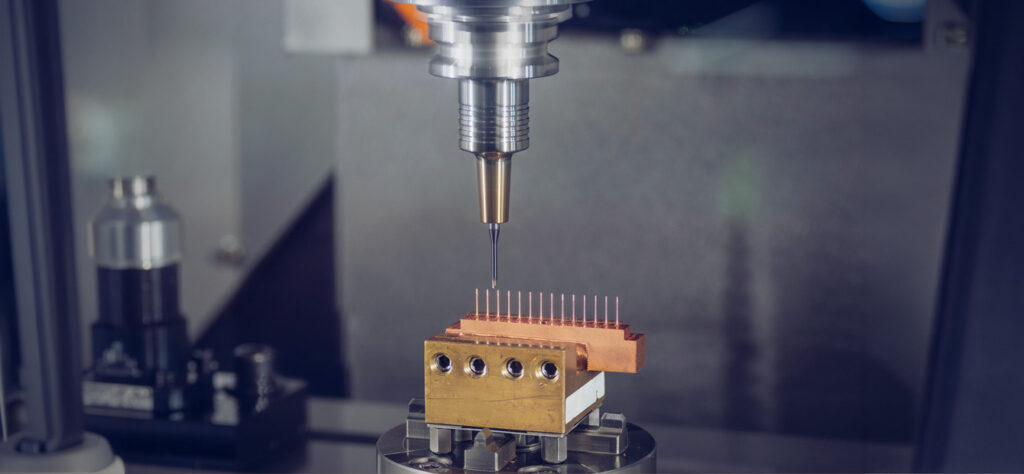
4 Trends Advancing the Defense Industry with Next-Gen Systems
Speed, autonomy, resilience, and precision are not only hallmarks of mission-critical systems for the defense industry, they are priorities leading the industry into a new era.
As global threats evolve and defense technology becomes more sophisticated, mission critical defense systems must follow suit to operate effectively in more extreme conditions than ever before.
However, one aspect remains unchanged: the need for highly-reliable, precision parts and assemblies built to exacting standards.
For manufacturers and OEMs in the defense supply chain, meeting these evolving needs goes beyond parts to include breakthrough, uncompromising performance. At Primus, we have always delivered value in these core priority areas, and in this post, we explain how deep expertise in complex machining, tight tolerance manufacturing, advanced materials, and quality-driven production is non-negotiable to bring the defense industry into the future.
4 Key Trends Reshaping the Defense Industry
Modernization of mission-critical parts and assemblies is accelerating rapidly across the defense industry, driven by numerous trends that support this advancement.

1. Hypersonics and High-Speed Platforms
Hypersonic systems are those capable of traveling at speeds greater than Mach 5, and represent one of the most significant shifts in modern defense technology.
These systems require components that can withstand:
- Extreme heat loads
- High-pressure environments
- Intense vibration and dynamic stress
- Tight dimensional tolerances at high speeds
Recent real-world application: The Defense and Security Monitor reports that the U.S. is currently developing three hypersonic weapons programs: the Navy’s Conventional Prompt Strike (CPS), the Army’s Long-Range Hypersonic Weapon (LRHW), and the Air Force’s Hypersonic Attack Cruise Missile (HACM)s.
The Defense and Security Monitor notes that hypersonic weapons must be highly accurate and reliable to provide effective military and deterrent value.
Extreme conditions demand precision performance – even minor design deviations or inconsistencies can impact aerodynamic performance, navigatory accuracy, and even survivability.
Dive Deeper: Mission-Critical Performance: Manufacturing for Extreme Conditions
2. Unmanned & Autonomous Defense Platforms
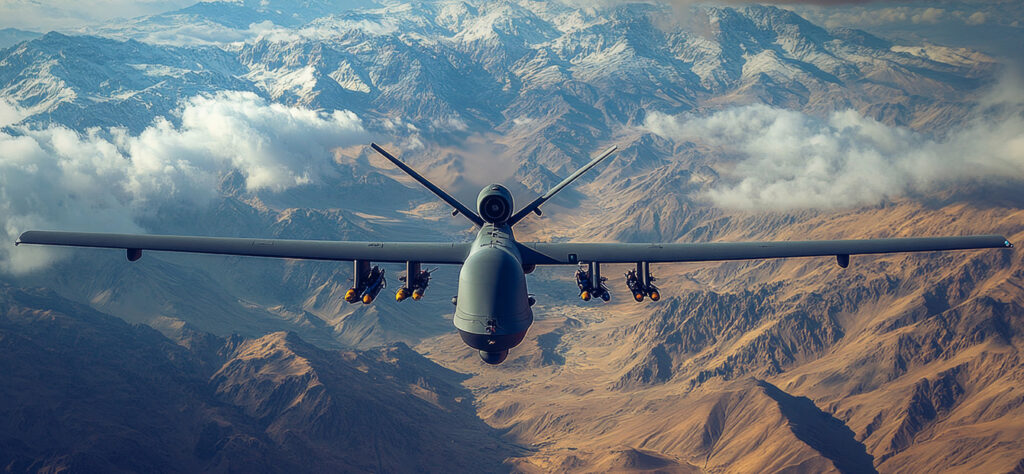
AI has proliferated nearly every industry at this point, and it’s literally in the driver’s seat of next-gen defense systems.
The technology behind unmanned aerial systems, autonomous vehicles, and remote technologies is evolving rapidly from remote controlled systems to fully AI-operated.
Additionally, these systems are being engineered at lighter weights with greater durability and higher precision in an effort to ensure exacting performance while maximizing efficiency.
As a manufacturer of parts and assemblies for these autonomous platforms, we’re focused on factors that include:
- Tight-tolerance housings for electronics
- Lightweight structural parts
- Complex geometries
- Rapid prototyping and iteration
- Reliable repeatability for scaled production
Recent real-world application: An AI investment company recently provided use cases of AI and autonomy at the center of defense systems, describing how an AI model controlled a self-driving off-road vehicle and two drones in a military base demo in California, demonstrating end-to-end autonomy from natural-language orders.
Light Detection and Ranging (LiDAR) systems are a perfect example of how AI and autonomy are improving performance. LiDAR systems often perform poorly in bad weather conditions, are high-cost, and are susceptible to security compromise and technology failure. AI solutions like the model tested in California are transforming fragile systems into intelligent and autonomous agents.
Dive Deeper: AI-Powered Data Analytics in Aerospace & Defense Manufacturing
3. Advanced Missile & Munitions Systems
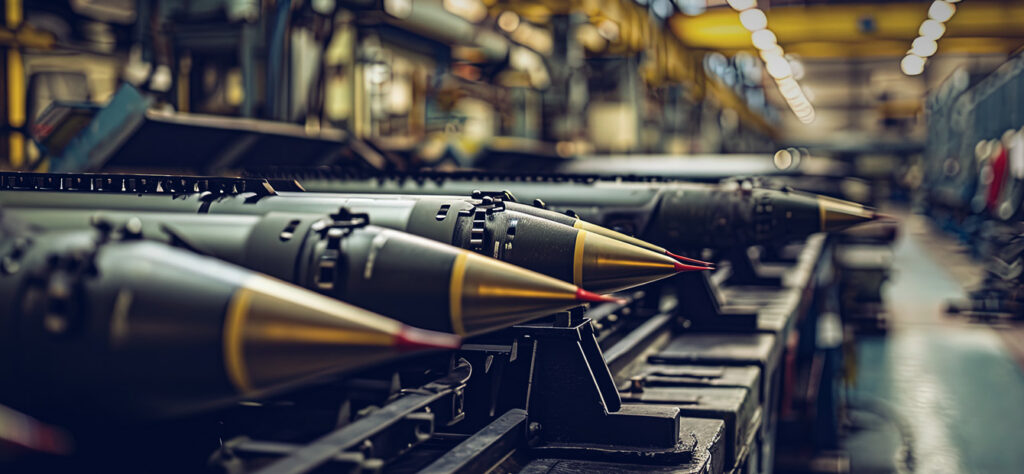
Modern missile systems are faster (thanks to hypersonic technology), more accurate, and more intelligent (hello, AI!). These systems are taking advantage of next-gen propulsion, targeting, and survivability technologies powered by parts and assemblies that meet higher standards for consistency and repeatability.
These parts and assemblies can include:
- Guidance system housings
- Structural assemblies
- Precision actuator components
- Propulsion-related hardware
- Aerodynamic control surfaces
Recent real-word application: The U.S. Navy recently announced plans to invest in Multi-mission Affordable Capacity Effector, or MACE, hypersonic missiles through the next five years. National Interest describes MACE missiles as an “air-launched anti-ship hypersonic munition”, and just one move among many the U.S. is making toward advancing its missile and munitions systems.
Primus is a proud manufacturer of complex assemblies and tight tolerance components essential to these next-gen missile and munitions programs, helping our customers maintain quality at scale.
Dive Deeper: Digital Thread in Manufacturing Aerospace Parts and Assemblies

4. Resilient Space & Satellite Defense Assets
Space is a major aspect of the defense domain with the use of satellites, launch systems, and orbital defense technologies. Some of the latest endeavors include maneuverable satellite designs that could support autonomous spacecraft that can move, coordinate, and respond while in orbit.
These applications all require exceptionally reliable components designed for zero-failure and withstanding one of the harshest environments we operate in. These parts and assemblies must endure:
- Thermal cycling
- Vacuum conditions
- Vibration during launch
- Long operational life with no serviceability
Recent real-world application: The 2026 Space Symposium featured unveilings of plans for spacecraft designed for on-orbit maneuvering that are also capable of flying close to and monitoring satellites, and shifting from ground-only communication to operating as part of other networked architectures.
Manufacturing methods for these applications must include the right materials to support such demanding performance in these high-consequence environments. Primus leverages emerging materials and technologies to support our aerospace and defense customers with mission assurance.
Dive Deeper: Emerging Materials in Aerospace
What Mission Critical Systems Will Require From Manufacturers
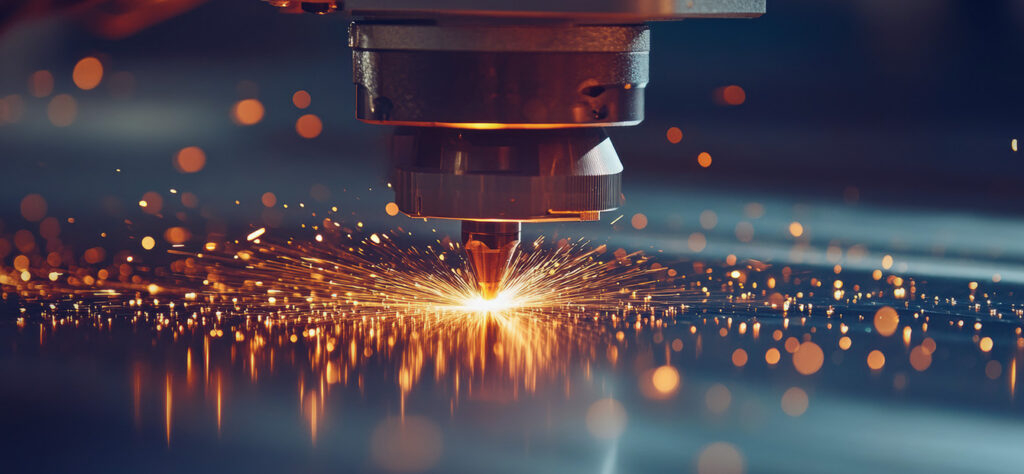
As defense platforms evolve, so too are supplier expectations. OEMs and primes are increasingly looking for manufacturing partners who can provide both capacity and next-gen performance and capabilities.
Our focus is to meet our customers where they are and where they’re going, with capabilities that include:
Precision at the Micron Level: Complex systems depend on exact tolerances for functionalities like guidance, propulsion, hydraulic, and structural applications.
Expertise with Advanced Materials: Next-gen systems rely on emerging materials like heat-resistant and lightweight alloys, composites, graphene, and polymer- and ceramics-based nanoparticles, all of which offer specialized capabilities like strength, heat-resistance, or a lighter weight.
Quality & Traceability: Documentation, inspection, process control, and repeatability rely on traceability, and are essential for compliance with defense regulations.
Dive Deeper: Why Traceability is Non-Negotiable in Aerospace Manufacturing
Supply Chain Reliability: Mission-critical programs must be executed with precision and on time. Trusted suppliers will consistently deliver high-performance parts and assemblies on schedule.
Dive Deeper: Mitigating Supply Chain Risks
Scalability: Manufacturers must support both low-volume prototyping and scalable production as programs mature. At Primus, we do both.
It may sound clichè, but the future of defense is here, and evolving as we speak. Faster, smarter, and more demanding, this next generation of defense requires significant investment of time and technology to deliver the performance required of today’s global military landscape.
Our role as a dedicated manufacturer hasn’t changed, but the way we execute it has. We’re turning next-generation concepts into deployable realities, helping our customers seamlessly advance along with the industry.
If your company is part of building the future of defense, choosing the right manufacturing partner is more important than ever.