

Uncompromising Quality Management for Mission-Critical Parts & Assemblies
Safety, reliability, and mission success are serious parameters guiding aerospace manufacturing, and certifications like AS9100 help ensure companies like Primus adhere to rigorous quality and customer satisfaction standards.
Meeting these standards isn’t just good business – although it is certainly a marker of a trustworthy manufacturer; it is a commitment to excellence and a demonstration of unwavering alignment with safety and reliability requirements in an industry where there is no room for error.
In this article, we explain AS9100 certification and why it’s such a critical proof-point in aerospace parts and assemblies manufacturing.

What is AS9100 Certification?
Broadly, AS9100 is the globally recognized quality-management standard for the aerospace, space, and defense (AS&D) industries. It’s an extension of the requirements of ISO 9001, the international benchmark for general quality management systems, but with additional provisions specific to AS&D.
AS9100 was not developed to define the precise quality of every part or act as any type of product specification. Instead, it puts in place the process an organization must follow to ensure every part and assembly is made consistently, reliably, and with safety guidelines to meet customer and regulatory requirements.
The International Aerospace Quality Group developed AS9100 in 1999 with help and input from major aerospace, defense, and space organizations worldwide. AS9100 was revised in 2016 to include greater requirements for manufacturing with consideration to evolving technology, market demand, and to keep pace with changes in the aerospace industry, such as cybersecurity risks, supply chain management, and ISO 9001 updates.
Today, AS9100 standards address a number of critical concerns that factor into the manufacturing process:
- Risk-based thinking
- Product safety
- Awareness of limiting human factors like fatigue, stress, or individual perception
- The Harmonized Structure framework for ISO management system standards
- Organizational context
- Stakeholder needs
- Prevention of counterfeit parts
- Configuration management
- Traceability
- Control over “special process”, such as welding and heat treatment, that cannot be fully verified by inspection alone
We can expect the official release of an international approach to the standard – IA9100 – in 2027, which will include the full AS9100 series with updates to specific areas around certification and auditing rules and greater requirements around risk and safety.

4 Ways Mission-Critical Manufacturing Benefits From AS9100
1. Consistency, Traceability, and Repeatability
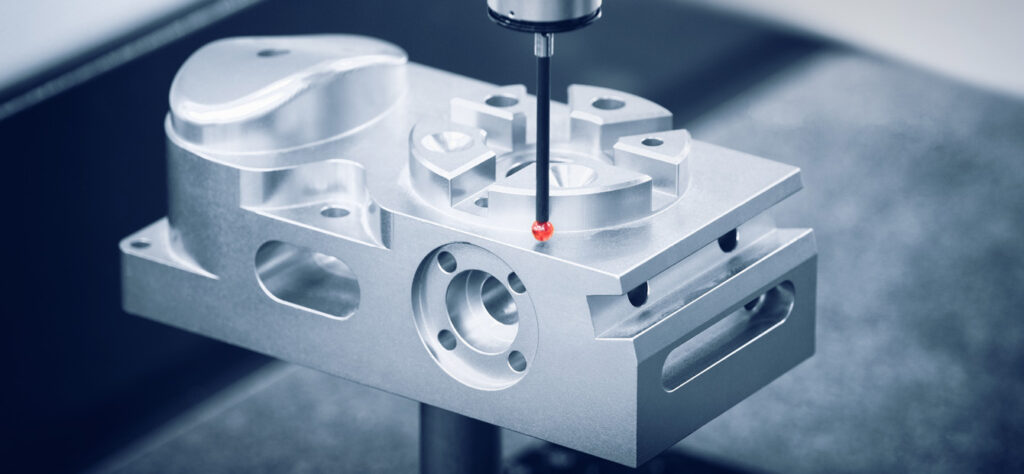
Because performance and safety can be quickly compromised by even the smallest variation, AS9100 importantly requires documented, repeatable processes from design through delivery to ensure each part meets the same high standard.
Further, the provisions within AS9100 focus on full traceability to record every raw material, process step, inspection, and test. Being able to go back and see where, when, and how something was manufactured is critical if anything goes wrong with mission-critical parts and assemblies.
2. Risk Management & Safety Focus
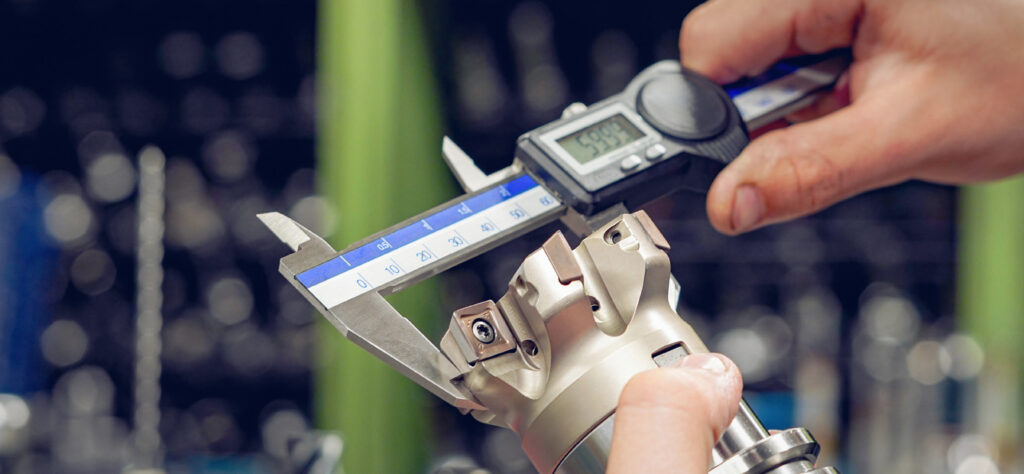
The extreme conditions aerospace parts and assemblies must withstand, such as stress, exposure, or impact, requires careful attention to issues before parts and assemblies are used. AS9100’s Risk-Based Thinking provision ensures proactive identification and mitigation of potential hazards during the design, manufacturing, inspection, and delivery processes – and requires controls over special processes that need additional validation to prevent latent defects and eventual part failures.
AS9100 also considers human factors that can lead to unintentional or preventable errors. Stress, fatigue or individual differences in perception can impact manufacturing processes, requiring specific quality-management procedures that minimize human-caused risk.

3. Regulatory & Customer Confidence, Global Acceptability
Achieving AS9100 certification significantly improves supply chain access, business credibility, and market growth as it demonstrates compliance with aerospace industry standards and regulatory expectations. Major aerospace OEMs, defense contractors, and other industry players around the world universally adopt AS9100, and it is often required for suppliers in order to do any business.

4. Operational Excellence & Continuous Improvement
In the same vein as global acceptability, companies that are AS9100 certified are held to the standardization, documentation, monitoring, and measurement of all processes, which reduces waste, minimizes defects, and ultimately improves manufacturing efficiency and the performance of parts and assemblies.
This certification also impacts internal teams, fostering a culture of continual improvement. Employees understand there is tracking against deviations, analysis of a product’s manufacturing trajectory, and implementation of corrective actions and procedures to prevent any recurrence.
AS9100 Certification in Action at Primus
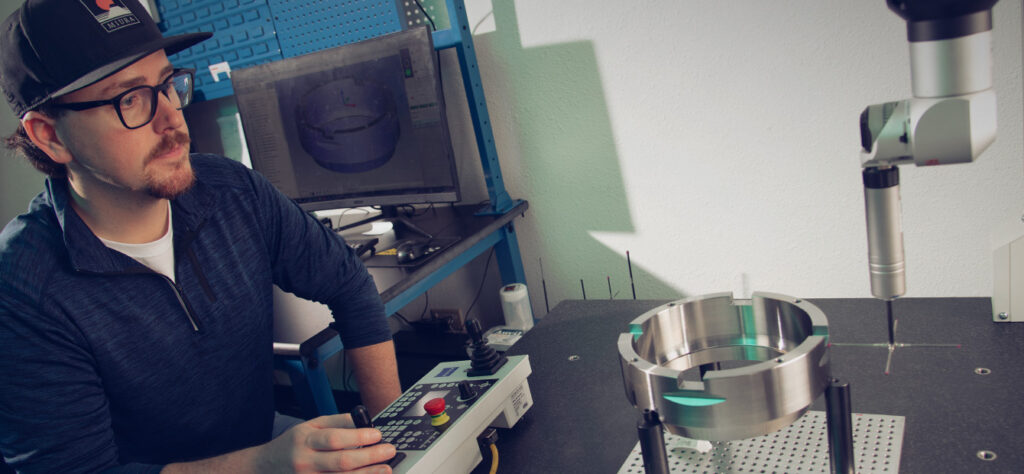
For us, AS9100 is a foundation of our business promise and function. We use AS9100 and other industry standards as frameworks to guide design, procurement, manufacturing, inspection, final assembly, and delivery – holding quality and a promise for safety, reliability, and customer satisfaction as our primary guiding principles.
The following actions are woven into our manufacturing approach:
- Documented procedures and process controls. Every operation, from raw material purchasing to final part shipment, is documented to ensure consistency and repeatability across batches.
- Enforced traceability and compliance. Across the supply chain, we apply traceability and compliance per our supplier and subcontractor controls, which ensures every subcontract, material, and process meets the same high standards we apply in-house.
- Stringent validation and verification. Every aspect of part and assembly design meets industry requirements, which is an especially important check and balance for special processes like specialized machining, heat treatment, finishing, and welding.
- Safety and reliability assessments. We account for risk factors caused by human error and other considerations and perform mitigation, human-factors training, and procedural audits to identify potential issues before they become problems.
- Continuous improvement. Feedback, quality control issues, or part deviations are logged and undergo a root cause analysis to ultimately further refine our processes and minimize defects and issues in the future.
- Customer confidence-building. We’re proud to give our customers the confidence that they’re working with an AS9100-certified manufacturer that is committed to the quality, safety, and reliability of their mission- and flight-critical parts and assemblies.

AS9100 Certification: A Non-Negotiable Step
Rigorous, industry-specific standards are what holds manufacturers to the highest level of quality, and AS9100 is one of the primary frameworks to enforce that approach. Without these standards and requirements, the risks are simply too high given the mission-critical nature of the aerospace industry.
Part deviations or defects, improper or incomplete documentation, lack of traceability around processes, and insufficient supplier control create high risk with potentially catastrophic consequences, which should be a non-negotiable scenario for any organization.
By operating under AS9100, manufacturers can demonstrate their commitment to quality, safety, reliability, and transparency: ensuring that every part and assembly not only meets specifications, but will perform as expected when it matters most.
We’re committed to delivering the quality, consistency, traceability, risk mitigation, and confidence our customers demand, which is why we adhere to AS9100 and continue optimizing our processes for the highest level of customer satisfaction.
