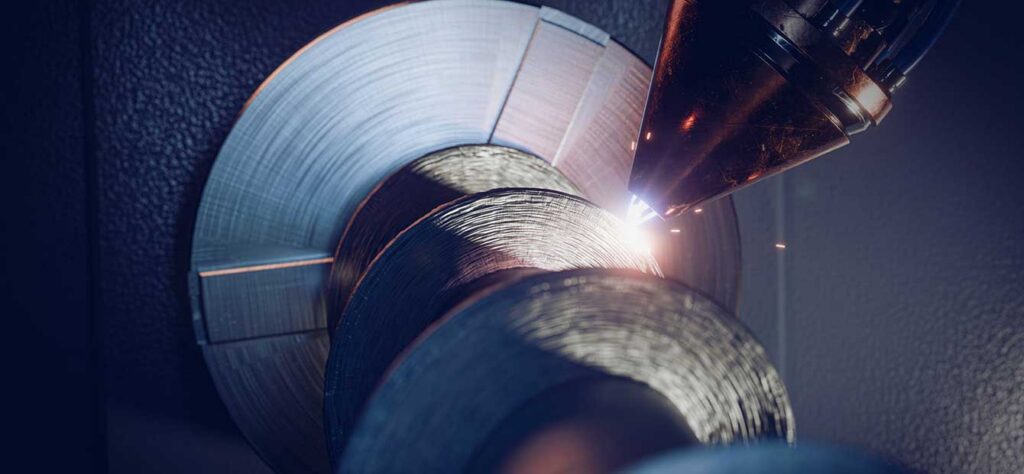
Where Precision Machining Still Delivers Unmatched Accuracy, Strength, and Reliability
Additive and subtractive manufacturing are two distinct approaches, but despite additive manufacturing being a rapidly evolving technology, both are essential for most aerospace applications.
For aerospace engineers and product developers, the question isn’t “additive manufacturing vs subtractive manufacturing”, but rather how to use each approach together for required product outcomes.
In this article, we explain the distinctions between additive and subtractive manufacturing and how each approach contributes in its own way to specific projects.
Additive Manufacturing Has Advanced the Aerospace Industry for Decades
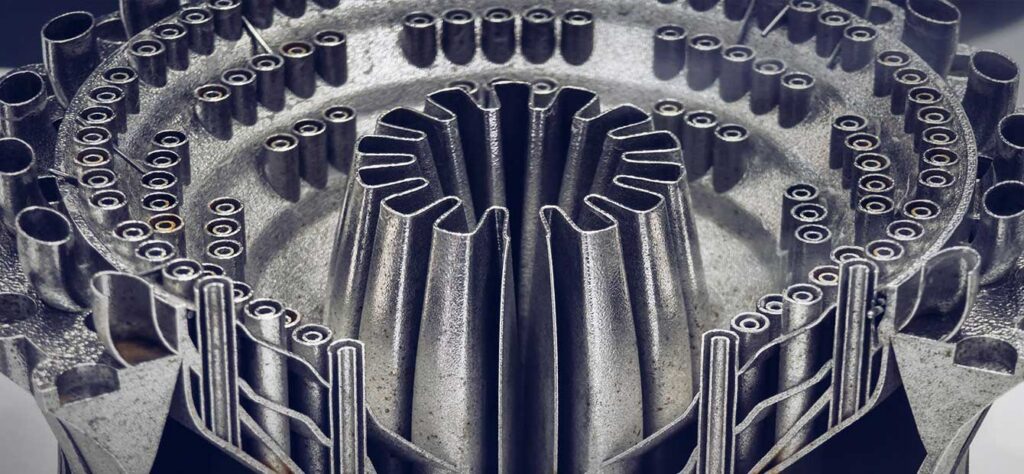
Additive manufacturing (AM) is more commonly known as 3D printing, a process that has been used in the aerospace industry for decades. For more than 35 years, companies have added raw materials on top of each other, building layer by layer to create reliable, accurate parts for use in aerospace systems.
Technological advances in AM have broadened the capabilities of aerospace manufacturers to deliver better products more efficiently. Some key benefits of additive manufacturing include:
- Faster product development
- Shorter production runs
- Greater complex design freedom
- Rapid prototyping
- Reduced material waste
- Lower production costs
- Greater customization opportunities
A ScienceDirect report names a number of high-performance metals and advanced composites ideal for additive manufacturing, which include:
- Polymers
- Ceramics
- Metal and alloys
- Steel and steel alloys
- Aluminum and magnesium alloys
- Titanium alloys
- Nickel alloys
Additive manufacturing has revolutionized how engineering ideas are brought to life, and is largely favored because of its ability to produce completely functional structures regardless of geometrical complexity.
3D printing for aerospace parts and assemblies includes multiple process types, which vary depending on the standards or trades organizations defining the process. The Association for Manufacturing Technology, for example, recognizes 17 additive manufacturing processes, while ASTM International recognizes seven focused largely on the physics of each process.
Some of the most common additive processes include:
- Laser powder bed fusion: Lasers melt metal powder, creating layers that produce parts with high-fidelity build features.
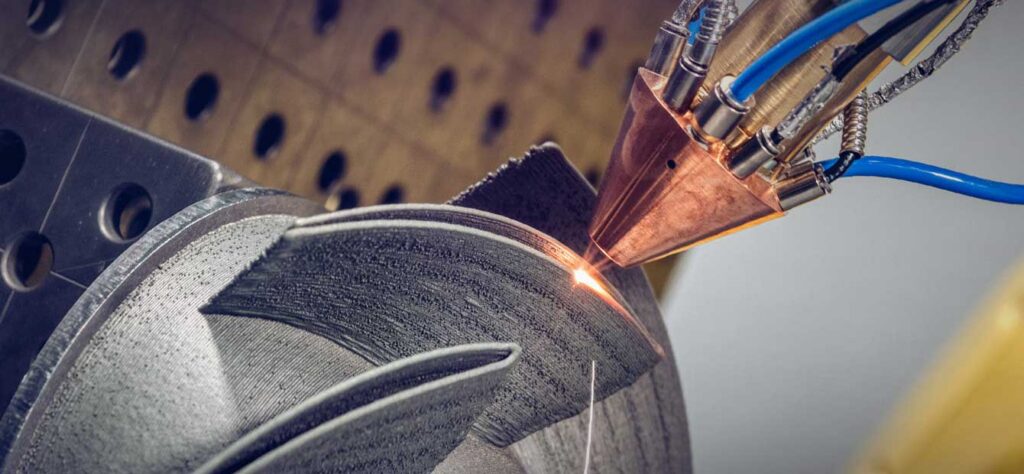
- Direct energy deposition: Melts material fed to a specific point on the build layer, creating complex objects that don’t require support structures.
- Material extrusion: A metal powder and binder is heated, softened, extruded, and deposited on the printed bed to improve adhesion between the material and the bed, creating the 3D object layer by layer through a lower-energy process than laser methods.
- Binder jetting: A 3D nozzle distributes alternating layers of powder and binding material; however, since this process relies on binding, it is not suitable for structural parts, and requires a longer post-processing time.
- Sheet lamination: A layer-by-layer bonding of thin material sheets fed through a system of feed rollers. The output is less accurate but is a fast process with a lower cost than other methods.
- Material jetting: Material is dropped onto the build platform and solidifies under a UV light, creating an object layer by layer. This process is known to create smooth finishes with high dimensional accuracy.
- Selective laser melting: A laser melts and fuses metallic powders, creating highly accurate, high-density parts with complex structures and geometries that deliver strength and durability.
- Direct metal laser sintering: A high-powered density laser sinters, or binds, metallic powder to produce complex geometries unique to this process.
Additive Manufacturing Plays a Major Role in Modern Aerospace Manufacturing
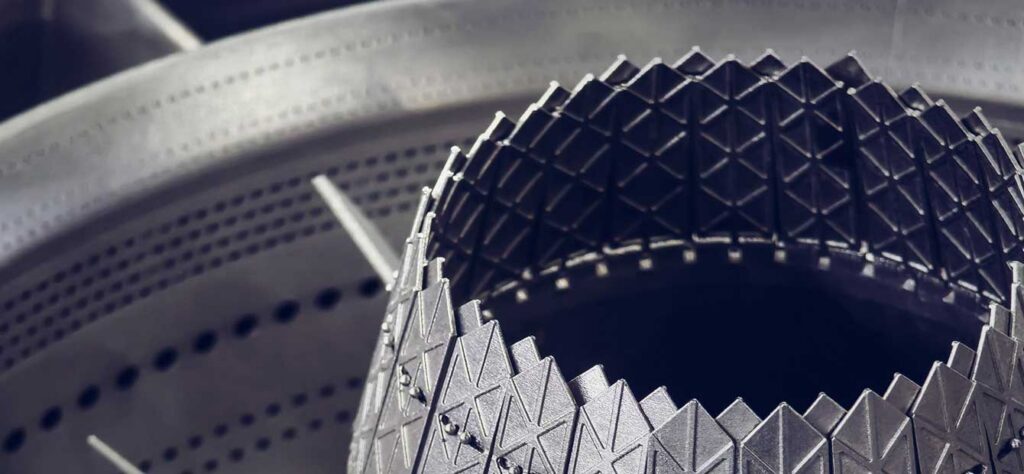
AM technologies are helping aerospace and defense companies manufacture or fix mission-critical parts and assemblies faster, more easily, and with the required durability and reliability to function on mission-critical systems.
As far back as 2017, Boeing has used 3D printed titanium parts for its Dreamliner commercial aircraft, a move that at the time was projected to save the company up to $3 million in production costs.
Another major additive manufacturing achievement comes from GE Aviation, which used laser powder bed fusion to produce the fuel nozzle tip for its CFM International LEAP jet engine, effectively consolidating 20+ parts into just one, and reducing the weight by 25%.
Dive Deeper: Emerging Materials in Aerospace
AM has exploded across the aerospace and defense industries, with companies from Airbus to SpaceX leveraging additive processes to improve aerospace systems with lighter, more cost-effective, high-performance parts.
However, subtractive manufacturing is still a critical element of the manufacturing process, playing a major role in ensuring precision, strength, and reliability.
Subtractive Manufacturing: Opposite But Just as Crucial
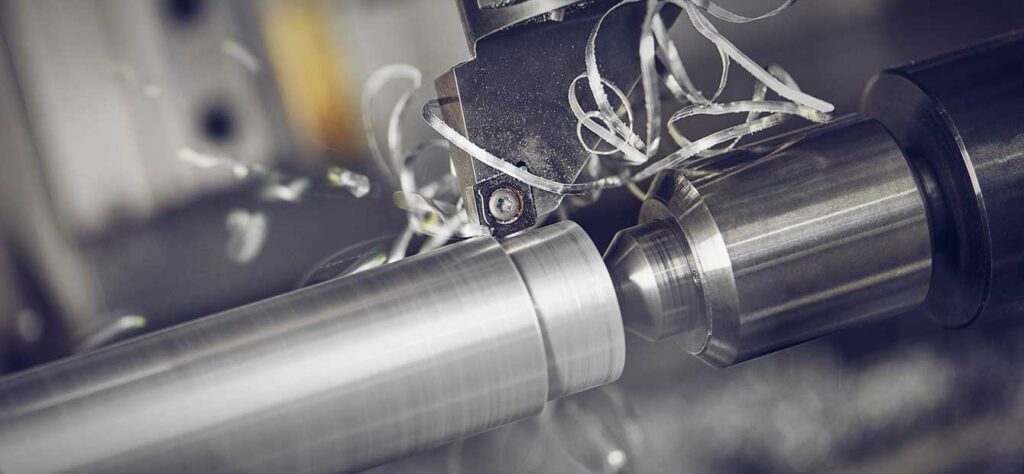
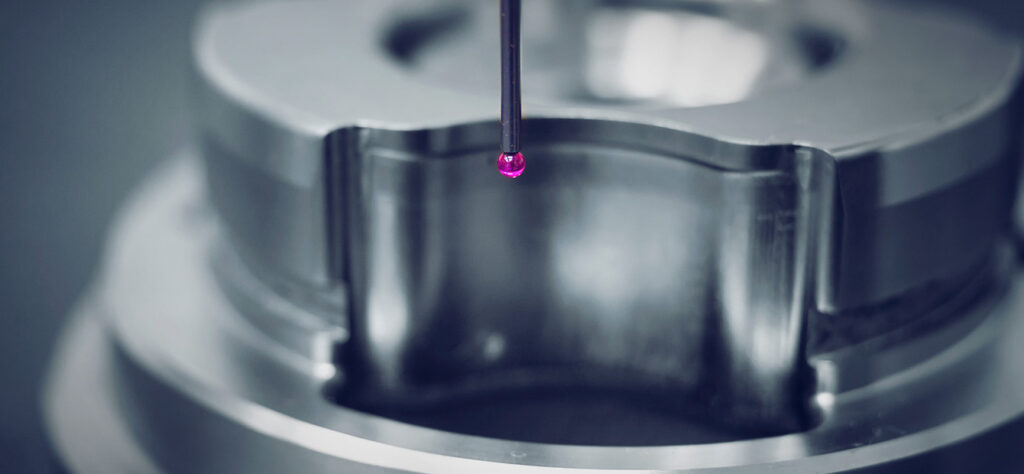
Subtractive manufacturing is quite literally the opposite of additive manufacturing – it creates 3D parts by removing material from a solid block using precision machining tools:
- CNC Milling: Cutting a fixed piece of material using a rotating tool.
- CNC Turning: Often used for cylindrical parts; the workpiece rotates while a stationary tool shapes the part.
- Laser Cutting/Waterjet: Cutting precise shapes using high-energy beams or high-pressure water.
- Drilling/Grinding: Using specialized tools to make holes or refine surface finishes.
Subtractive manufacturing is widely used in the aerospace industry, especially when speed and strength are required for high-volume production and heavy-duty metal or plastic parts.
Boeing, Lockheed Martin, SpaceX, and Airbus – among many other major aerospace and defense manufacturers – rely on advanced CNC machining for their manufacturing processes; Lockheed Martin creates durable, reliable parts for the F-35 and other military aircraft with CNC machining, effectively meeting the mission-critical demands of the aerospace and defense industries.
Areas Where Subtractive Manufacturing Takes the Win
Alongside the major benefits of additive manufacturing, subtractive manufacturing provides value in ways that will never be outshined by evolving technologies or processes. It ensures parts meet uncompromising performance requirements through repeatability, dimensional control, strength, accuracy, and maintaining ultra-tight tolerances across complex metal printed parts.
Exceptionally Smooth Surface Finishes: Machining processes can achieve highly-refined finishes that support:
- fatigue resistance
- fluid dynamics
- thermal performance
- seal integrity
- wear resistance
Dive Deeper: Navigating Tight Tolerance Machining in Aerospace and Defense Manufacturing
Conversely, additive manufacturing frequently requires post-processing, such as with binder jetting, or other steps like polishing or machining to meet surface finish specifications.
Material Integrity & Mechanical Properties: Traditional machining processes begin with forged or wrought materials that offer highly-predictable grain structures and mechanical properties, delivering consistency and repeatability that is ideal for parts exposed to:
- extreme temperatures
- high vibration
- pressure loads
- cyclic fatigue
- harsh operating environments
Dive Deeper: Manufacturing for Extreme Conditions
For many aerospace OEMs and defense contractors, precision machining is the most dependable method for consistent production quality.
Certification and Compliance: Strict quality and regulatory requirements largely determine the process by which a part is manufactured, and traditional machining processes are deeply rooted within the aerospace qualification frameworks, including:
- AS9100 standards
- First article inspections
- Statistical process control
- Material traceability
- Non-destructive testing requirements
While additive manufacturing standards are advancing quickly, certification pathways for many 3D-printed flight-critical and mission-critical components remain more limited and application-specific.
3D Printing and Traditional Manufacturing: It’s Not Either/Or
As with most things, a hybrid approach to additive and subtractive manufacturing is the best practice. Combining these technologies creates a nice balance between design flexibility and precision and reliability.
A realistic example of a hybrid workflow might look like this:
Step 1: Additive manufacturing produces a near-net-shape geometry
Step 2: Subtractive manufacturing finishes critical surfaces and tolerance features
Step 3: Inspection and validation ensure final compliance
As aerospace platforms become more complex with hypersonics, next-gen propulsion systems, and autonomous defense technologies, this hybrid manufacturing approach will likely become even more important.
Dive Deeper: What’s Ahead for Mission-Critical Systems?
At Primus, we understand that while precision machining requires the addition or removal of material, at its core, it’s about delivering accurate, consistent, quality parts for the world’s most demanding aerospace and defense applications.