The Tools and Techniques for Accuracy, Stability, and Productivity in Manufacturing
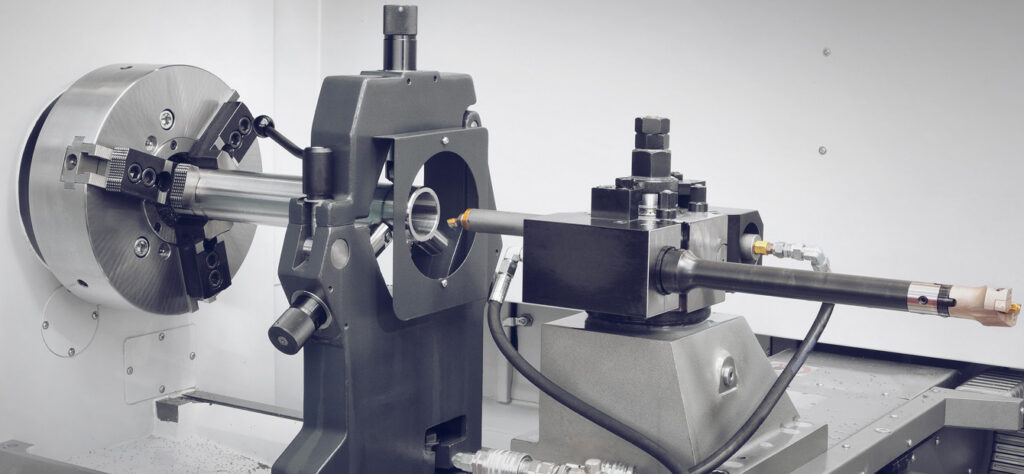
Even the most sophisticated machines, tools, and programming strategies can’t deliver a stable, repeatable method for locating, supporting, and anchoring raw materials while they undergo heavy machining. What’s needed to achieve those functions are custom fixtures aligned with intelligent workholding strategies.
Because components used in aerospace or defense applications include features like tight tolerances, thin walls, and intricate geometries, they’re made using special, exotic materials that can deliver those unique properties.
While exotic materials can present machining challenges, workholding alleviates them by keeping the part in place during CNC mill or lathe operations, preventing the part from flying off as the machine removes material.
Without that kind of stability and anchoring, perfect tools and toolpaths won’t matter or contribute to a precise final product. That said, workholding must be implemented and used properly so as not to introduce additional challenges in the manufacturing process.
In this post, we explain how workholding enables aerospace and defense manufacturers to take advantage of emerging materials while improving productivity.
Evolving Aerospace Designs Demand Equally Evolved Machining Processes
If you make complex parts for mission-critical applications, you know the challenges of increasing efficiency, particularly when using exotic materials like titanium, Inconel, aluminum alloys, and stainless steel, which require multiple machining operations.
Dive Deeper: Emerging Materials in Aerospace and How They Affect Machinability & Design
On one hand, these materials make it possible to manufacture aerospace and defense parts with highly-specific (and highly critical) characteristics:
- Thin walls
- Complex, contoured surfaces
- Deep pockets and cavities
- Lightweight designs
- Tight geometries, dimensioning, and tolerances
On the other hand, these materials can actually increase machining challenges because of their physical properties, including heat resistance, work hardening, and abrasiveness.
When there is no room for error, even microscopic shifts can cause dimensional deviations that increase time and cost.
Dive Deeper: What Aerospace OEMs Should Know About Tolerance Stackups in Assembly
However, workholding solutions bridge the crucial gap between the beneficial characteristics of exotic materials and the machinability challenges they present.
Workholding Solves Often Expensive, Time-Consuming Manufacturing Challenges
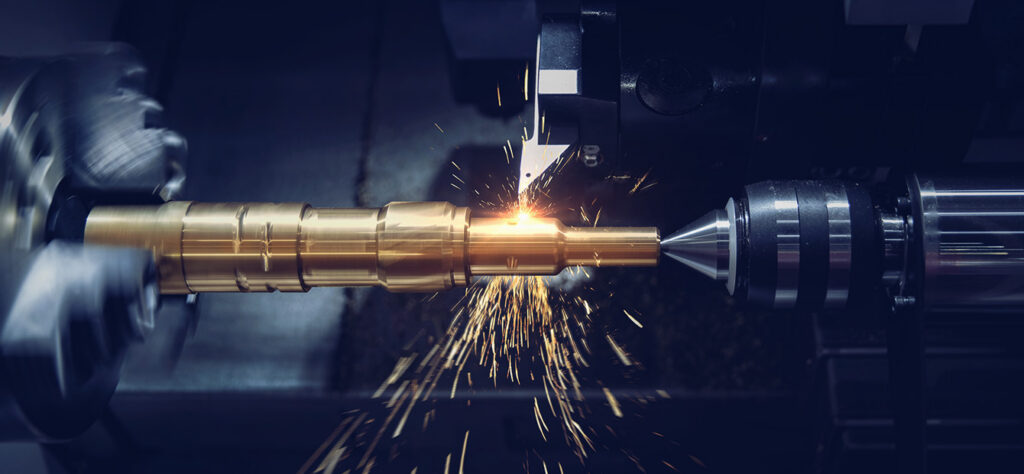
Advanced workholding solutions add that critical extra layer of protection for machining processes, and help manufacturers achieve business objectives like improving production efficiency, reducing setup times, cutting costs, or maintaining tight tolerances for complex parts.
The publication Aerospace Manufacturing and Design published a case study in January 2026 about the advanced workholding solution GE Aerospace implemented to drastically cut production times for a jet engine compressor spool and a forged shaft.
When adopting an advanced workholding solution, program leaders must consider some important details; at GE Aerospace, these were included in the initial vetting process:
- How does your end-to-end manufacturing process work?
- What manufacturing methods do you currently use?
- Which operations or processes are dependent on prior ones?
- What parts and materials are involved, and what is their level of complexity?
Dive Deeper: Designing for Manufacturability
Your due diligence will likely lead you in the direction of one or more of the following workholding solutions:
Clamp & Vice Workholding: Built for Complex Geometries
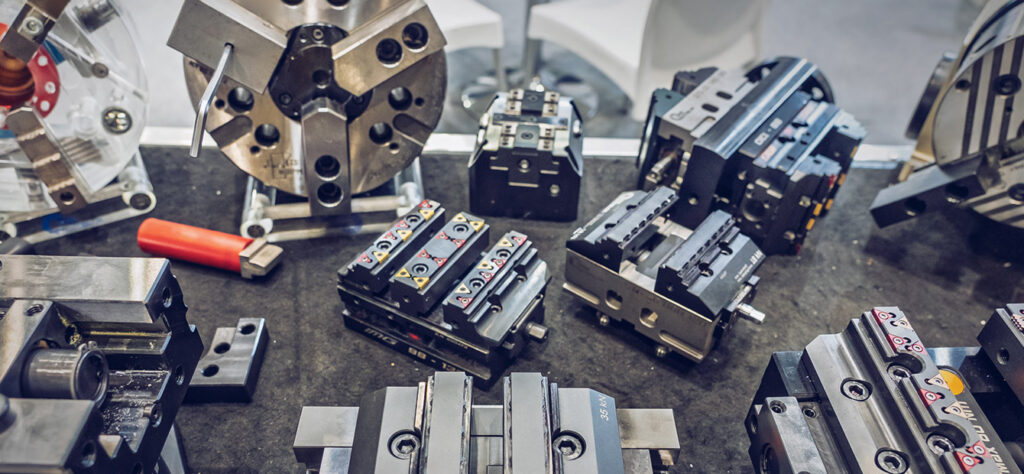
Aerospace parts often feature complex shapes that cannot be accommodated during machining with standard, off-the-shelf clamps and vises. Custom workholding fixtures effectively support unique geometries while preventing part distortion.
A Purdue University article identifies types of surface finishes to consider in determining clamping and vice solutions:
- Most ideal: Parallel surfaces that have been machined on a CNC mill can be confidently used inside flat jaw clamps.
- Acceptable: Extruded raw stock from a factory, which may look parallel and flat but is typically not. Best used with snap jaws.
- Least ideal: Surfaces that have been cut with a bandsaw are least ideal for clamping as they have poor finishes, including a burr that must be removed. Bandsawed surfaces need to be prepped before use and snap jawed clamps are strongly recommended.
While perfectly parallel sides are preferred to ensure full contact and prevent the part from flying out of the clamp during machining, custom workholding fixtures help secure a part at strategically selected locations to provide maximum stability without stressing the part.
Vacuum Workholding: Distortion Prevention for Thin-Walled Materials
For aerospace and defense parts being designed specifically for weight reduction, lighter materials like aluminum and other alloys are ideal options but are more susceptible to distortion during machining.
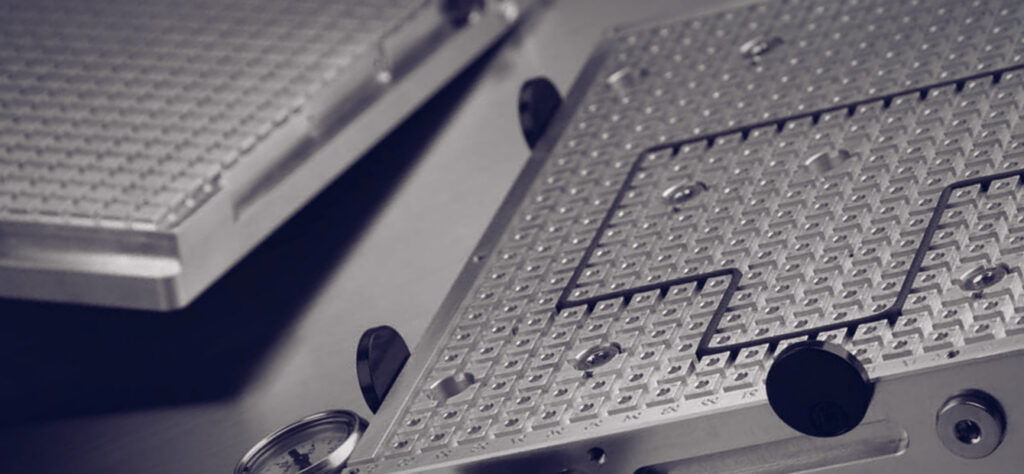
Using a custom vacuum solution distributes the holding force across a larger surface area, rather than concentrated at individual clamp points, resulting in:
- Reduced part deformation
- Improved access to machined features
- Better support for delicate structures
- Enhanced surface quality
Vacuum workholding is ideal for aerospace panels, structural covering, lightweight housings, and other components where traditional clamping would introduce stress on the part.
Hydraulic & Pneumatic Clamp Workholding: High-Volume Production Support
High-volume production environments meeting consistency and efficiency demands can leverage hydraulic and pneumatic workholding systems to precisely control clamping pressure.
A more custom pressure control secures more delicate or sensitive parts while reducing distortion risks. These systems provide:
- Repeatable clamping forces
- Faster loading & unloading
- Reduced operator variability
- Improved cycle-to-cycle consistency
Automated clamping systems also support advanced automation initiatives that are increasingly adopted in the aerospace industry.
Choose the Right Workholding Solution for Your Machine Shop’s Needs
Workholding solutions aren’t one-size-fits-all – you must choose the right one for your specific needs. For example:
→ Looking to increase throughput? Use workholding solutions that integrate with automated systems.
→ Are you handling high-mix, low-volume work? Use workholding solutions that are adaptable and allow for quick changeovers between different part geometries.
→ Do you use 4- and 5-axis CNC machining? Use specialized workholding solutions that provide access to all sides of a workpiece.
→ Are you using delicate materials or manufacturing parts that require full access to the outer diameter for machining? Use ID (Inner Diameter) workholding solutions that can grip the workpiece from the inside.
→ Do you struggle to manage vibration and chatter during machining? Use workholding solutions that provide supplemental support structures, dampening systems, and strategic clamping points.
Other common workholding solutions include:
- Custom or dedicated fixtures, such as picture frames or custom vise jaws
- Modular and zero-point systems, such as zero-point clamps and pyramid risers
- Vacuum and magnetic chucks, such as vacuum tables and electromagnetic chucks
- Precision turning and cullet systems, such as diaphragm and collet chucks
- Adaptive workholding and automation, such as air-detect banking surfaces
Modern Machine Shop offers a list of specific workholding solutions that deliver in these different categories, so you can find what works best for your projects.
Additionally, modern aerospace manufacturers are increasingly using digital tools like CAD, simulation software, and finite element analysis (FEA) to optimize workholding before production begins.
These tools help optimize workholding fixtures by evaluating design elements like clamping forces, fixture rigidity, vibration behavior, machining accessibility, and part deformation risks.
Virtual validation identifies potential issues early, reducing development time and minimizing rework.
Advanced Workholding Creates a Stable Foundation – in More Ways Than One
Advanced workholding certainly falls into a quality control category, but it is also about productivity and shop optimization.
- Reduce setup time
- Minimize rework and scrap
- Improve machine utilization
- Enable unattended machining
- Increase throughput
- Improve overall equipment effectiveness
These production gains directly translate to profitability and customer satisfaction, as well as delivery and part performance.
With such high standards required throughout the aerospace and defense manufacturing industries, advanced workholding leaves you better positioned to deliver quality parts on time.